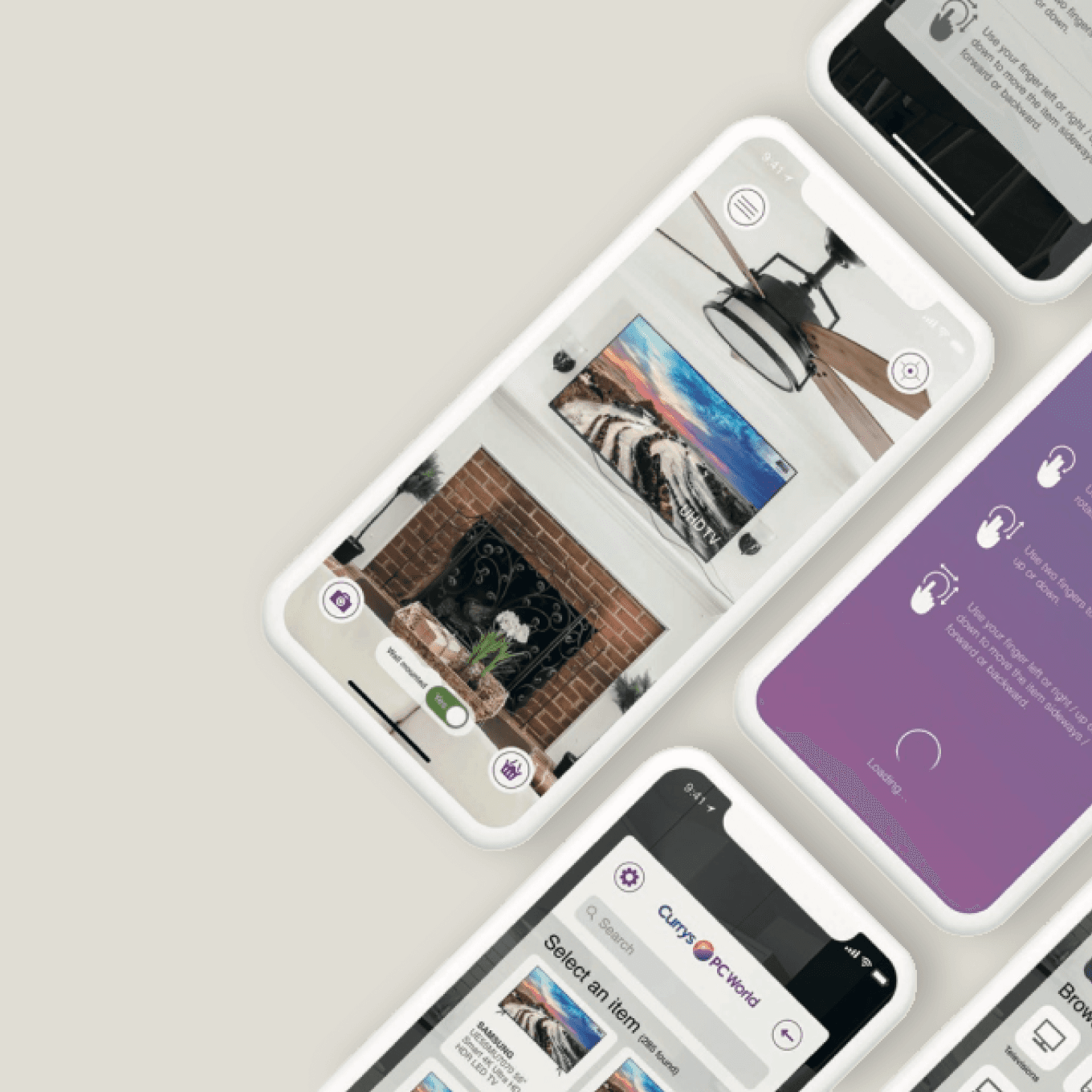
Description
COMPANY | ROLE | IMPACT |
|---|---|---|
Currys | UX Designer | +30% add-to-cart |
The Problem
Customers shopping for large furniture and appliances online faced a fundamental question: "Will this actually fit in my space?"
This uncertainty was expensive. High return rates for big-ticket items meant warehouse staff constantly loading and unloading returned TVs, fridges, and sofas. Customers abandoned carts when they couldn't visualize products in their homes. And our online conversion lagged behind competitors who were experimenting with new technologies.
Dimensions on a spec sheet weren't enough. We needed to bridge the gap between online browsing and showroom confidence.
What I Did
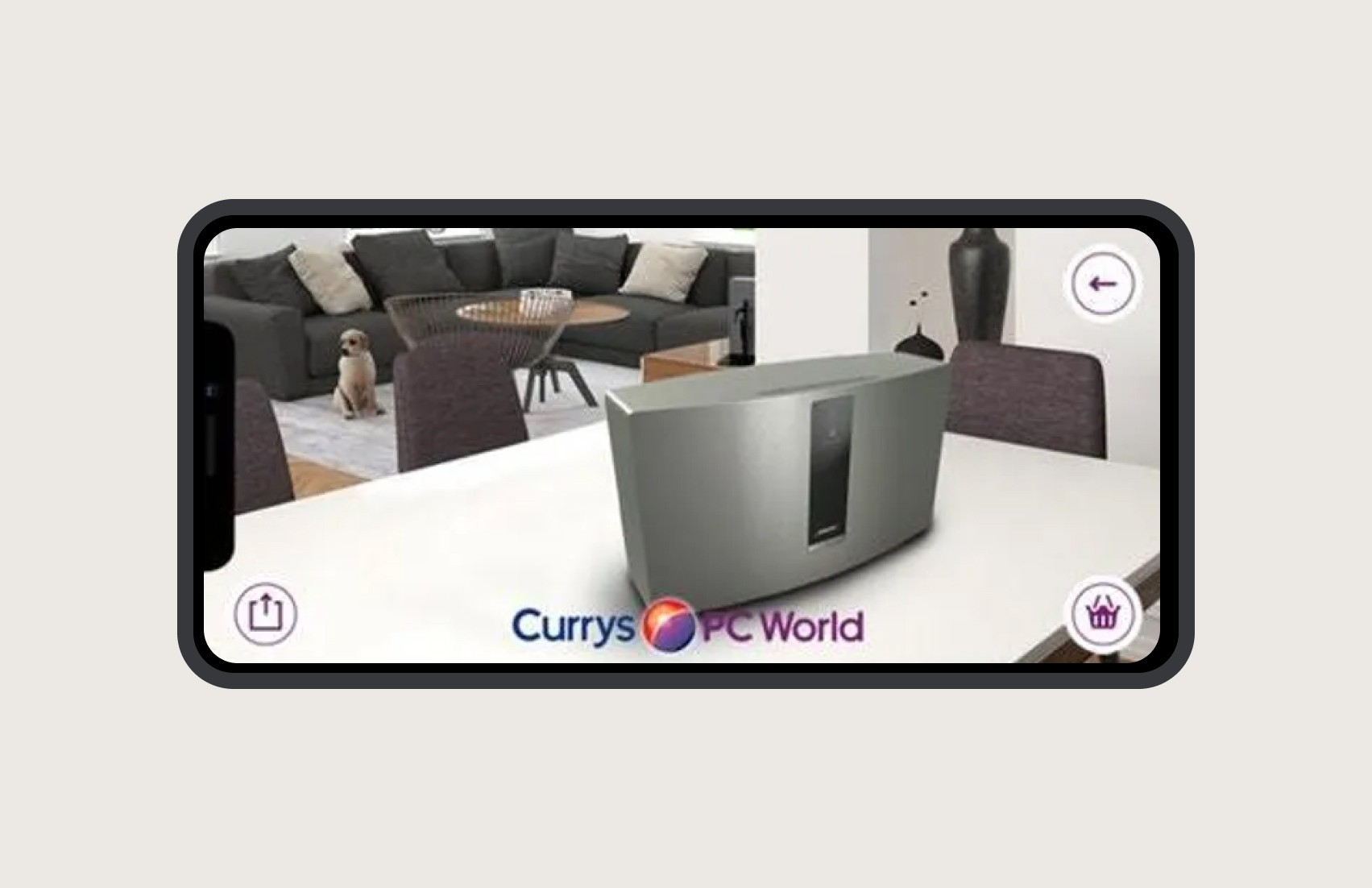
I designed the complete user experience for Point & Place — an AR feature that let customers visualize products in their actual rooms before purchasing.
The project required breaking down a complex technical challenge into a seamless user journey:
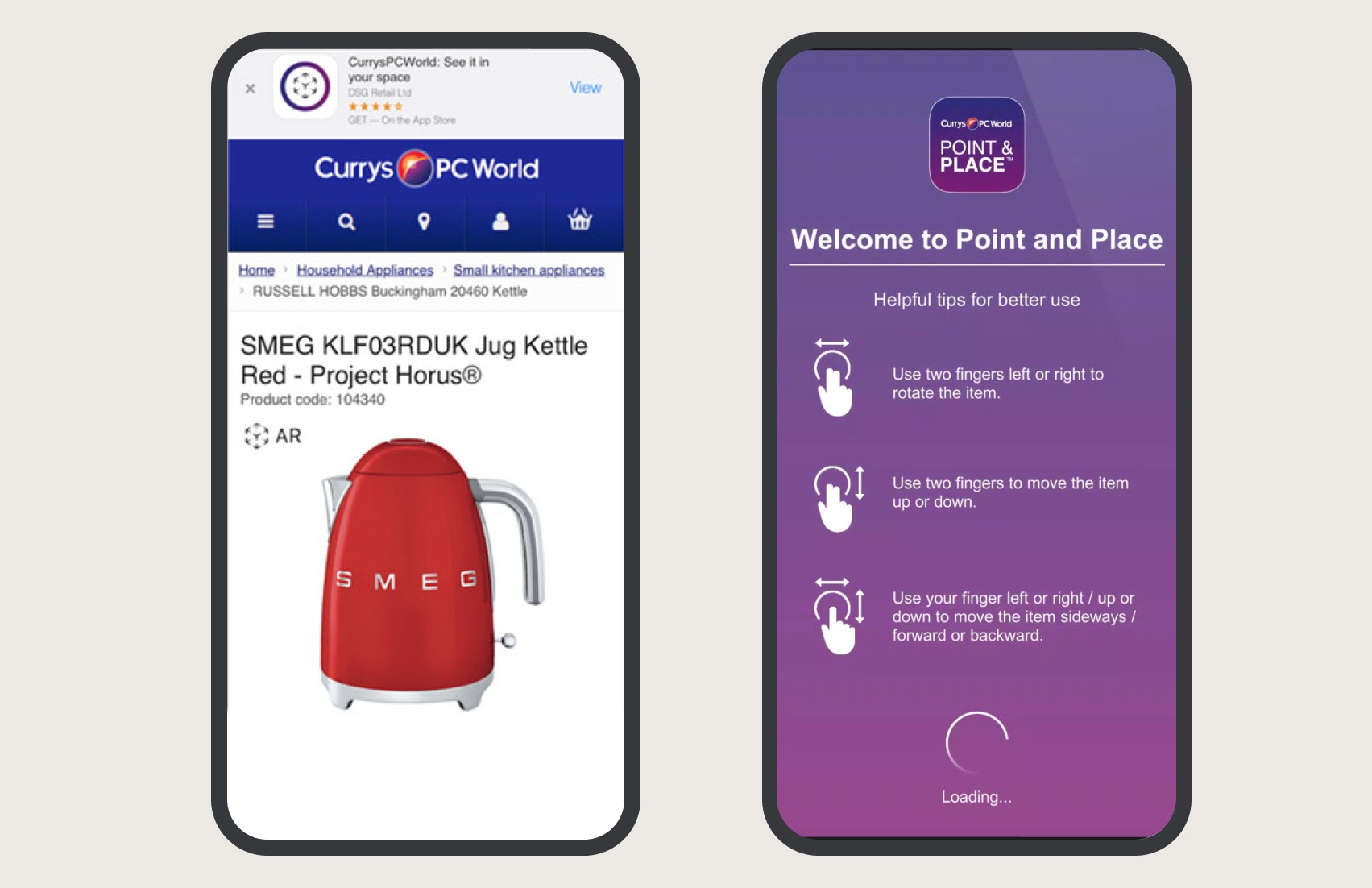
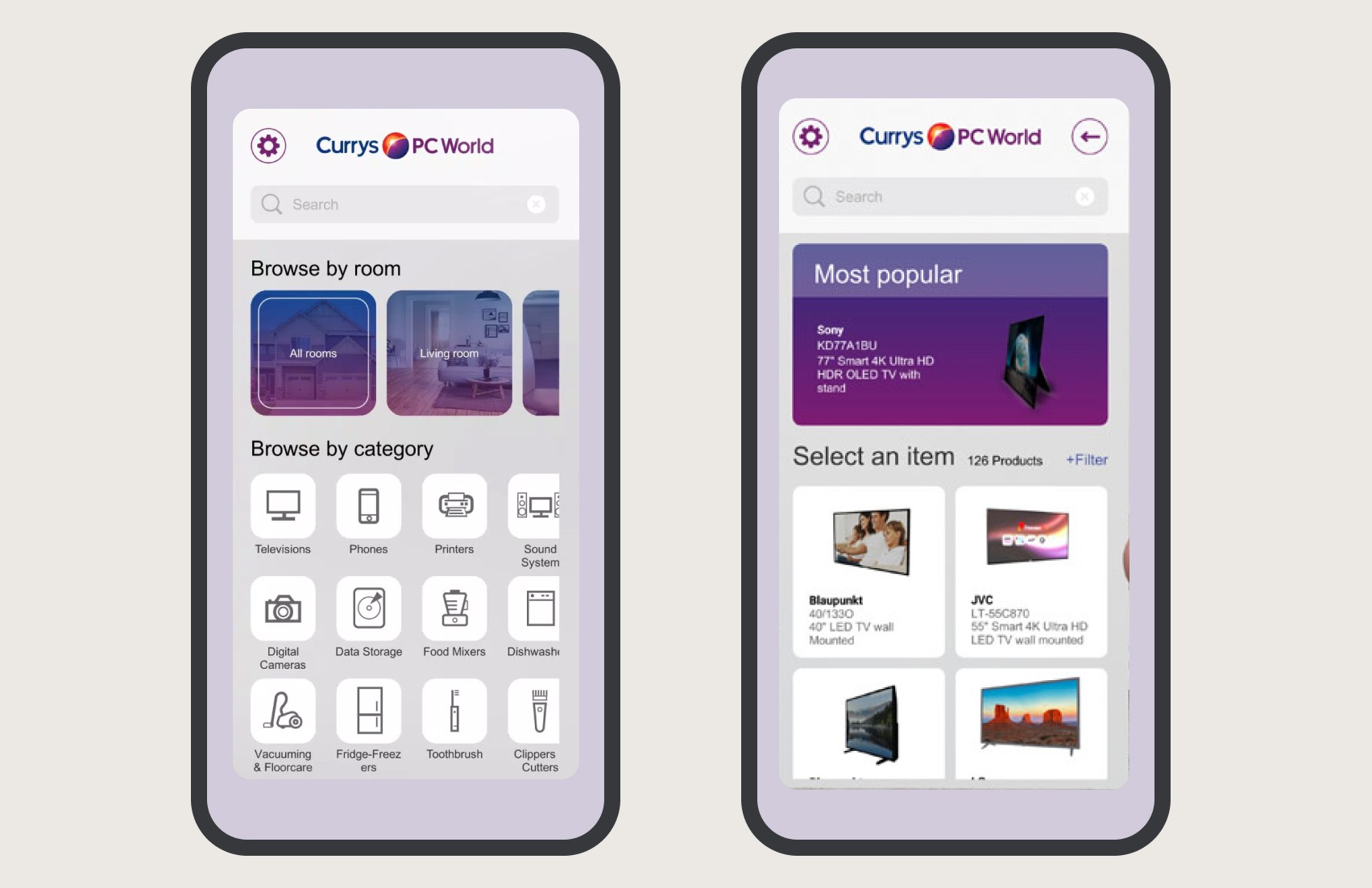
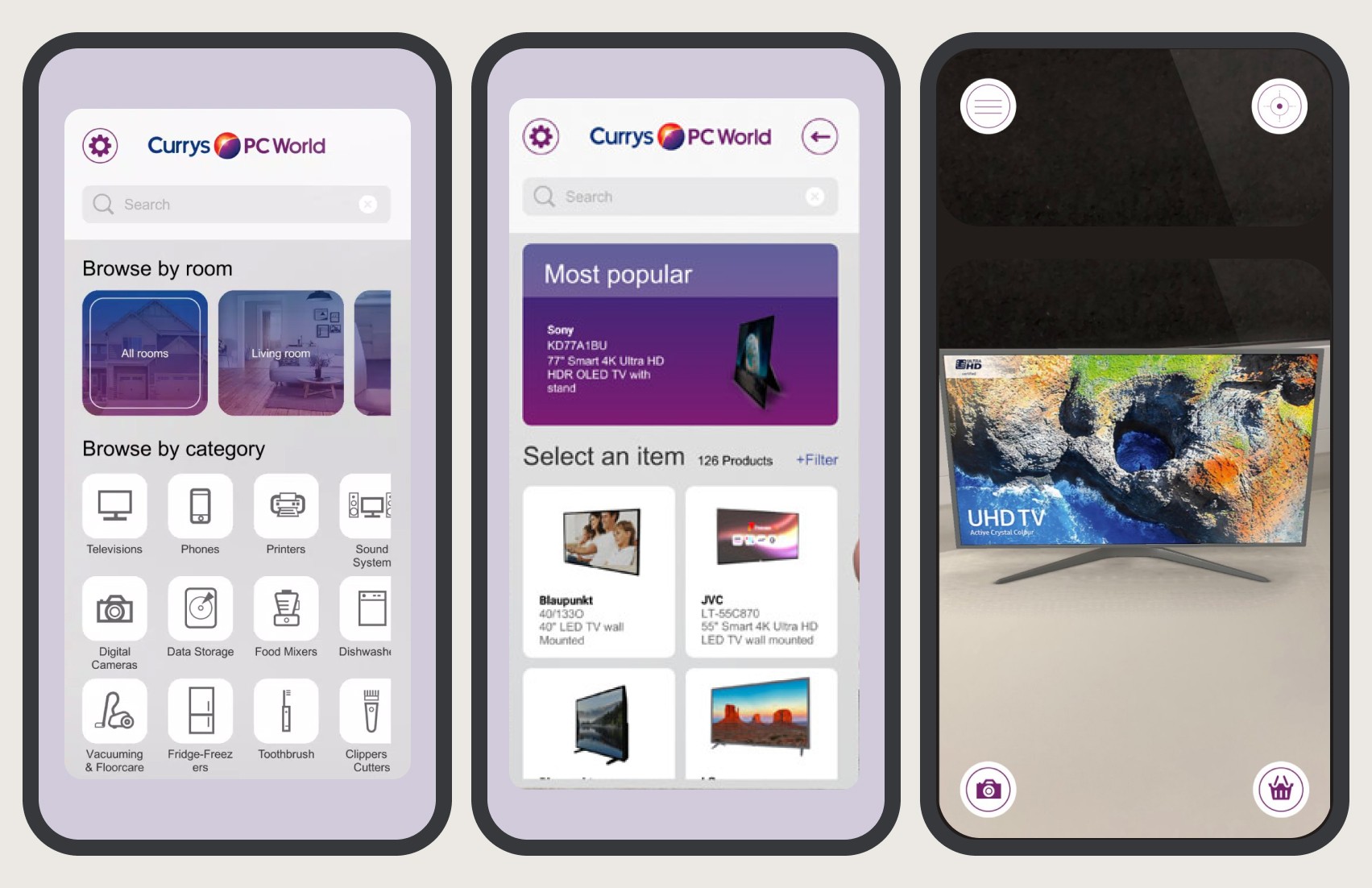
Mapped the end-to-end experience from app discovery to purchase completion
Designed onboarding flows that made AR technology accessible to non-technical users
Created gesture controls for product placement, rotation, and scaling
Developed fallback experiences for devices without AR capability
Integrated AR seamlessly with the existing checkout flow
This wasn't just interface design — it required understanding hardware constraints, 3D asset requirements, and platform differences between iOS and Android.
Key Design Decisions
1. Minimize friction to first AR experience
In-store usability testing revealed that camera permission requests killed conversion. I designed a progressive disclosure flow: show the value of AR first (with preview images), then request permissions only when users were ready to try it.
2. Make placement feel physical
Early prototypes felt floaty and artificial. I worked with engineering to add subtle shadow effects and surface detection feedback that made virtual products feel grounded in real space.
3. Keep the purchase path short
We deliberately kept checkout out of the AR app. Once users felt confident about fit, one tap took them to the website to complete purchase. Simple beats clever.
Results
METRIC | BEFORE | AFTER |
Add-to-cart rate for AR users | Baseline | 30%+ increase |
Returns for dimension-related issues | High | Significant reduction |
Average order value (AR users) | Baseline | Higher |
Currys became one of the first UK retailers to successfully implement AR at scale. The project established a foundation for future AR features and positioned the company as an innovation leader.
What I Learned
Emerging technology projects succeed when you focus on the human problem, not the technology. Nobody cares about ARKit or SLAM algorithms — they care about knowing their new TV will fit above the fireplace. The best AR is AR you forget you're using.
My Role
✓ End-to-end UX design for AR experience
✓ User journey mapping and onboarding flows
✓ In-store usability testing
✓ Cross-platform design (iOS/Android)